High-Performance Load Balancing
HAProxy Database Load Balancing
HAProxy is an enterprise-grade, event-driven TCP load balancer and reverse proxy engineered for database traffic. It provides high-throughput Layer 4 routing, sub-millisecond dispatch latency, SSL/TLS termination, and deep health check integration with failover managers like Patroni and Orchestrator. By queueing bursts and isolating degraded nodes, HAProxy absorbs connection storms and keeps routing up through failovers. JusDB provides HAProxy DBRE, hitless reloads, and agreed incident response, with 24x7 on-call available.
Deploy enterprise-grade HAProxy solutions for high-performance database load balancing, SSL termination, and traffic management across MySQL, PostgreSQL, and more.
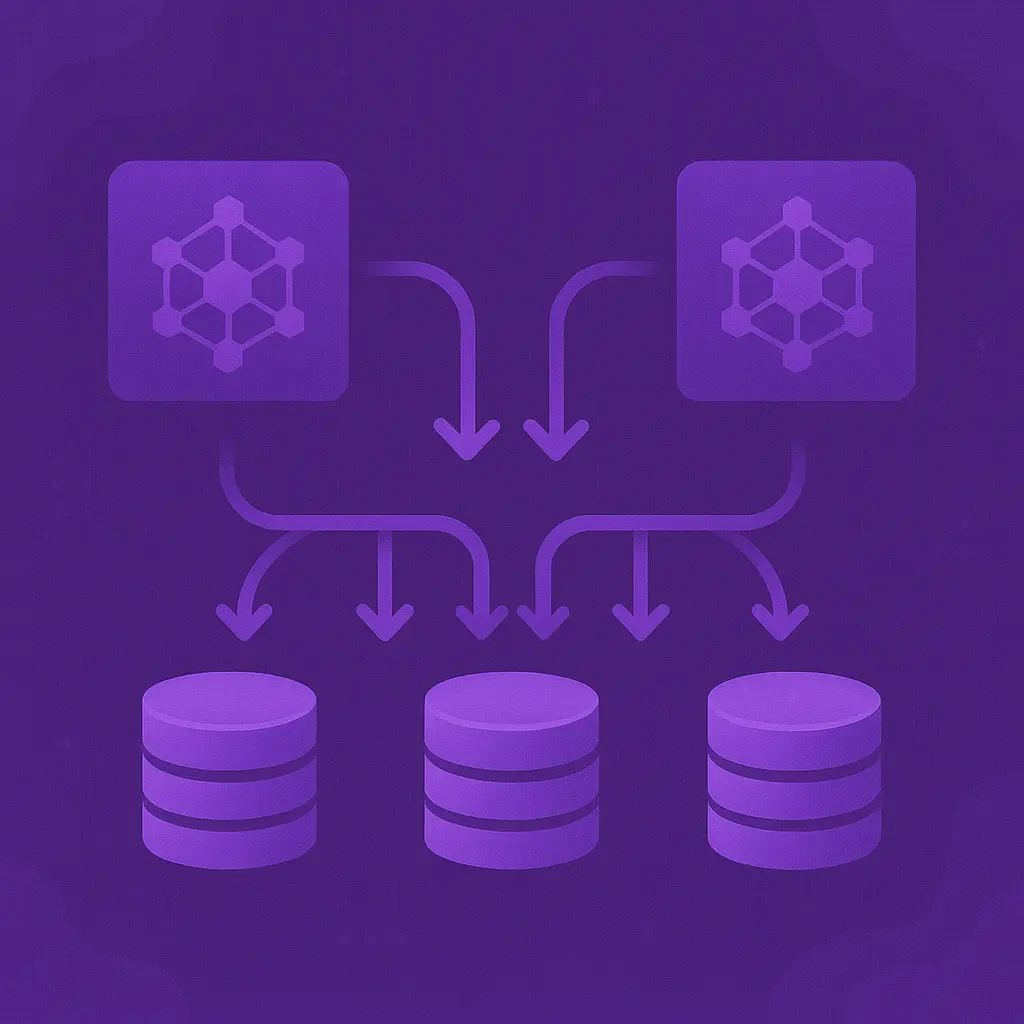
Comprehensive HAProxy Services
From initial setup to advanced optimization, we provide complete HAProxy solutions for high-performance database load balancing.
HAProxy Implementation
Complete setup and configuration of HAProxy for database load balancing
- Load balancing algorithm configuration
- Backend server pool setup
- Health check configuration
- Session persistence setup
SSL/TLS Termination
Secure SSL termination and certificate management for encrypted connections
- SSL certificate installation
- TLS protocol optimization
- Cipher suite configuration
- HSTS and security headers
Performance Optimization
Advanced tuning for maximum throughput and minimal latency
- Connection pooling optimization
- Buffer size tuning
- Timeout configuration
- CPU and memory optimization
Health Monitoring
Comprehensive health checking and automatic failover capabilities
- TCP and HTTP health checks
- Custom health check scripts
- Automatic server removal
- Graceful server recovery
Multi-Database Support
Load balancing for MySQL, PostgreSQL, MongoDB, and other database systems
- MySQL/MariaDB load balancing
- PostgreSQL connection routing
- NoSQL database support
- Protocol-specific optimization
Advanced Configuration
Expert configuration for complex routing, ACLs, and traffic management
- ACL-based routing rules
- Rate limiting and throttling
- Request/response modification
- Logging and analytics setup
HAProxy Database Failure Modes
Critical Layer 4 routing, socket exhaustion, and failover failure modes audited and resolved by JusDB DBREs to protect production database clusters.
TCP Half-Closed Sockets & Connection Table Exhaustion
Applications terminating ungracefully without sending TCP FIN/RST packets leave orphaned TCP sockets in CLOSE_WAIT or ESTABLISHED state inside HAProxy, saturating global maxconn tables and denying new connection attempts.
Calibrate timeout client-fin and timeout server-fin to 5s, enable TCP keepalives, and instrument socket table alerts on Prometheus haproxy_process_current_connections.
Lagging Node False Positive Routing During Asynchronous Replication
HAProxy's basic TCP health checks report read replicas as 'UP' even when replicas suffer multi-minute replication lag, leading applications to read stale data and break consistency contracts.
Implement HTTP health check agents or Patroni /replica REST endpoints enforcing max-lag byte thresholds, automatically setting backend server state to MAINT when lag exceeds SLA.
Thundering Herd Starvation During Database Maintenance Reloads
Sudden reconfiguration reloads without master-worker socket handover cause HAProxy to sever or flush backend queues, unleashing thousands of concurrent reconnects onto newly promoted database nodes.
Enforce master-worker hitless reloads (-W -db), configure backend maxconn throttling with timeout queue, and pace connection ramp-up via slowstart parameters.
Production HAProxy Diagnostic Runbooks
Real-time commands executed via the HAProxy UNIX runtime socket (/var/run/haproxy.sock) to inspect connection session rates, backend queue depth, and online node maintenance states.
Queries live backend health, active session rates, and queued connection count across all database server pools.
# Query live backend status, session rates, and queue depth
echo "show stat" | socat stdio /var/run/haproxy.sock | cut -d ',' -f 1,2,18,19,34,57,58 | column -s, -t

# Inspect active frontend/backend sessions and global connection limits
echo "show info" | socat stdio /var/run/haproxy.sock | grep -E "CurrConns|Maxconn|Uptime_sec"
Drains backend servers for maintenance and validates health check response strings from upstream database nodes.
# Soft-drain a backend database server without severing active queries
echo "set server db_cluster/pg-node-1 state drain" | socat stdio /var/run/haproxy.sock

# Inspect server health check results and response times
echo "show servers state" | socat stdio /var/run/haproxy.sock
HAProxy vs Cloud NLB vs Alternatives
Compare HAProxy against generic cloud load balancers and DNS VIP routing across critical database reliability vectors.
| Evaluation Vector | JusDB HAProxy DBRE | Cloud NLB / ALB | DNS-Based VIPs Default |
|---|---|---|---|
| Database L4/L7 Protocol Routing | Optimized TCP routing for PostgreSQL and MySQL protocols, separate reader/writer port binding, and transparent connection reuse | Generic TCP layer-4 forwarding without database awareness or transaction sensitivity | Application-level routing configurations or unoptimized reverse proxies creating connection bloat and uneven backend load |
| Dynamic Health Checking & Role Detection | Deep HTTP health checks querying Patroni /primary or MySQL replication status; automated 2s eviction of degraded backend nodes | Basic TCP port ping checks that report an instance as 'healthy' even when the database is read-only or in recovery mode | Custom shell scripts checking port 5432/3306 without validating master/replica status, routing writes to dead or demoted servers |
| Connection Queuing & Thundering Herd Defense | Calibrated backend maxconn queueing with custom timeout client/server thresholds, shielding databases from traffic spikes | Unbounded pass-through connections directly propagating traffic surges into database connection exhaustion | Zero connection queueing; microservice restarts trigger massive connection floods crashing backend database instances |
| TLS Offloading & Security Protections | Hardware-accelerated TLS termination, mTLS client certificate authentication, connection rate limiting, and DDoS blast radius containment | End-to-end unencrypted TCP or basic TLS termination without database client authorization validation | Unencrypted internal VPC connections or complex per-database certificate maintenance with frequent expiration outages |
| High Availability & Seamless Reloads | Active-passive HAProxy pairs with Keepalived VRRP, seamless socket transfer on reload (hitless reload), and zero dropped transactions | Single proxy instance or DNS-based load balancer requiring several minutes for TTL failover propagation | Hard restarts on configuration updates severing thousands of active application queries and transactions |
| Monitoring & Incident Response | Real-time HAProxy stats socket scraping into Prometheus, backend queue backlog alerting, and senior DBREs on your incident bridge. Initial-response targets: 2 to 4 hours in covered business hours; 30 minutes for P1 incidents with 24x7 on-call. Targets, not resolution guarantees. | Standard cloud support tickets with multi-hour triage delays and no database proxy operational expertise | Operations teams guessing whether an outage is caused by proxy timeouts, network saturation, or database deadlock |
Why Choose HAProxy for Database Load Balancing?
HAProxy delivers unmatched performance, reliability, and flexibility for enterprise database environments.
Extreme Performance
Handle millions of concurrent connections with sub-millisecond latency and minimal resource usage.
Enterprise Security
Advanced SSL/TLS termination, DDoS protection, and comprehensive access control lists.
Real-Time Analytics
Built-in statistics dashboard with detailed metrics, health monitoring, and performance insights.
Flexible Configuration
Powerful configuration language with advanced routing, ACLs, and traffic shaping capabilities.
HAProxy commonly fronts PostgreSQL high-availability clusters managed by Patroni — routing writes to the primary via its REST health endpoints — and pairs with ProxySQL for protocol-aware MySQL read/write splitting.
Advanced Load Balancing Algorithms
Choose the optimal algorithm for your database workload and traffic patterns. MySQL and PostgreSQL use binary wire protocols load-balanced in TCP mode, where round-robin, least-connections, and source-IP hashing apply — URI hashing and HTTP-mode features only apply to HTTP-protocol services.
Round Robin
Distributes requests evenly across all available servers
Perfect for homogeneous server environments with similar capacity and performance characteristics.
Best for: Equal server capacity
Least Connections
Routes to the server with the fewest active connections
Ideal for long-running database connections and varying request processing times.
Best for: Long connections
Weighted Round Robin
Distributes based on server capacity weights
Optimizes load distribution across servers with different hardware specifications and capabilities.
Best for: Mixed server types
Source IP Hash
Routes based on client IP address hash
Ensures session persistence by consistently routing clients to the same backend server.
Best for: Session persistence
Health-Based
Dynamic routing based on server health and performance
Automatically adjusts traffic distribution based on real-time server health and response times.
Best for: Dynamic environments
HAProxy database load balancing — frequently asked questions
Common questions about HAProxy implementation and database load balancing.
Ready to Optimize Your Database Performance?
Let our experts implement high-performance HAProxy solutions for your database infrastructure.