Debezium CDC Platform
Debezium Change Data Capture Consulting
Debezium is a distributed open-source Change Data Capture (CDC) platform built on Apache Kafka Connect that tails database transaction logs to stream row-level insert, update, and delete events with sub-100ms latency. JusDB delivers end-to-end Debezium SRE, schema registry integration, replication slot protection, and pipeline resilience (at-least-once delivery by default, exactly-once where Kafka Connect supports it), with agreed incident response (24x7 on-call available).
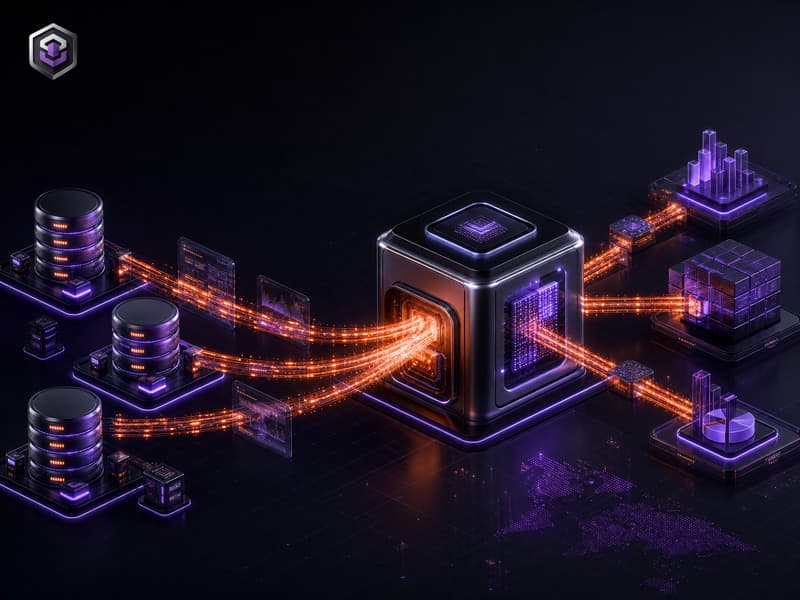
Stream database changes in real-time with Debezium's log-based CDC platform. Build event-driven architectures with reliable, low-latency data streaming.
- Log-based CDC
- Capture changes directly from database transaction logs with minimal impact.
- Kafka Integration
- Stream database changes to Apache Kafka for real-time processing.
- Schema Evolution
- Handle schema changes gracefully with automatic schema registry integration.
Debezium Services We Provide
From connector setup to production monitoring, we handle your entire CDC pipeline.
Log-based CDC
Capture changes directly from database transaction logs with minimal impact.
Kafka Integration
Stream database changes to Apache Kafka for real-time processing.
Schema Evolution
Handle schema changes gracefully with automatic schema registry integration.
Multi-Database Support
Connect MySQL, PostgreSQL, MongoDB, SQL Server, and more.
Fault Tolerance
Offset-based recovery after restarts; at-least-once delivery by default, exactly-once where Kafka Connect supports it.
Security & Monitoring
Secure data streaming with comprehensive monitoring and alerting.
What's Included in Our Debezium Service
Debezium & Kafka Connect: Critical Failure Modes
Log-based streaming eliminates source query load, but misconfigured connectors can destabilize the primary database. Here are the 3 critical failure modes our Streaming SRE team mitigates:
Replication Slot Unconsumed WAL Bloat & Disk Exhaustion
If a Debezium connector task pauses, stalls, or crashes, the source PostgreSQL logical replication slot or MySQL binlog stream remains open and unconsumed. The database holds all subsequent transaction logs on disk, rapidly exhausting 100% of storage and causing immediate database crash.
Configuring max_slot_wal_keep_size in PostgreSQL, deploying automated replication slot heartbeat tables, and monitoring unread WAL byte thresholds with automated disconnect triggers.
Incompatible DDL Schema Evolution & Kafka Poison Pills
Upstream developers alter a column type or drop a column without schema registry pre-registration. Debezium produces an event schema incompatible with downstream consumers, causing Kafka Connect sink tasks to fail repeatedly in a crash loop.
Enforcing schema registry compatibility checks (BACKWARD/FULL_TRANSITIVE) via Confluent or Apicurio, deploying Single Message Transforms (SMTs) for schema masking, and configuring dead-letter queues (DLQ).
Kafka Connect Task Rebalance Storms & Duplicate Events
Network blips or consumer group offset commit timeouts trigger frequent Kafka Connect rebalances. Debezium connectors restart from the last committed source offset, re-emitting unacknowledged change events and causing duplicate state mutations in downstream sinks.
Configuring idempotent Kafka producers (enable.idempotence = true), tuning heartbeat.interval.ms and max.poll.interval.ms, and implementing deduplication keys in downstream sink consumers.
Our Streaming SREs execute read-only queries to monitor replication slot lag and inspect Kafka Connect task health without halting active data streams:
SELECT slot_name,
       plugin,
       active,
       pg_size_pretty(pg_wal_lsn_diff(pg_current_wal_lsn(), restart_lsn)) AS unconsumed_wal_lag,
       confirmed_flush_lsn
FROM pg_replication_slots
WHERE slot_type = 'logical';# Check connector task state, worker ID and error trace
curl -s http://localhost:8083/connectors/debezium-postgres-connector/status | jq '{
name: .name,
connector_state: .connector.state,
tasks: [.tasks[] | {id: .id, state: .state, worker: .worker_id}]
}'How JusDB Debezium CDC compares to alternative approaches.
Log-based Change Data Capture with Debezium and Kafka unlocks sub-100ms data synchronization, but demands rigorous guardrails against replication slot bloat, schema drift, and rebalance storms. Here is how JusDB compares to managed CDC offerings, batch polling, and DIY setups.
| Engineering Dimension | JusDB Debezium SRE | Managed Cloud CDC | Batch Polling ETL | DIY Kafka Connect |
|---|---|---|---|---|
| Transaction Log-Based Capture vs Polling | Zero source database query overhead, capturing INSERT/UPDATE/DELETE events and intermediate states directly from WAL/binlog with <50ms latency | Cloud CDC services support basic tables but introduce read latency spikes and lack transaction boundary controls | Uses batch SQL queries (WHERE updated_at > ?) causing table locking, missing deleted records, and high CPU spikes | Periodic polling jobs miss transient data mutations and overload primary database connection pools |
| Replication Slot & Binlog Purge Safeguards | Automated WAL/binlog retention guards, heartbeat table integration, and fail-safe alerting preventing primary disk exhaustion | Basic slot metrics provided; unconsumed replication slots lead to primary database disk full crashes without automated remediation | Unaware of logical replication slot disk consumption; risks bringing down production databases when consumers stall | Stuck Kafka consumer causes PostgreSQL pg_wal directory to fill 100% disk, forcing emergency database shutdown |
| Schema Evolution & Registry Compatibility | Confluent/Apicurio Schema Registry integration, Avro/Protobuf serialization, and backward-compatible DDL schema migration handling | Schema evolution often breaks downstream connectors, requiring manual restart and connector re-registration | Uses unversioned JSON payloads, causing downstream microservices to fail silently when columns are added or modified | Schema alterations in source database cause Debezium task crashes and poison pill messages in Kafka topics |
| Exactly-Once Delivery & Deduplication | Kafka idempotent producers, transaction coordinators, and sink deduplication strategies preventing duplicate records during rebalance | Guarantees at-least-once delivery; customer is responsible for designing application-level deduplication layers | Duplication spikes during network reconnects, corrupting downstream analytical and reporting aggregates | Consumer group rebalances cause duplicate transaction events to process twice in accounting systems |
| Incident Response & Escalation | Named streaming and CDC engineers join your incident bridge. Initial-response targets: 2 to 4 hours in covered business hours; 30 minutes for P1 incidents with 24x7 on-call. Targets, not resolution guarantees. | Managed streaming support routed through general cloud queues with hours of delay for connector restart guidance | Offshore ticket dispatcher with no expertise in Kafka Connect offsets, source partitions, or Debezium metrics | Engineers struggling to inspect Debezium JMX metrics and offset topics during critical data pipeline stalls |
| Multi-Engine Support & Single Message Transforms (SMTs) | Production connectors for MySQL, PostgreSQL, MongoDB, SQL Server, and Oracle with custom SMT masking and event filtering | Limited connector catalog with rigid transformation capabilities and steep licensing costs for proprietary engines | Only supports simple MySQL binlog streaming without data masking or sensitive PII redaction pipelines | Unmasked customer PII streamed into Kafka topics, creating severe compliance and GDPR violations |
How does Performance scale?
Typical characteristics of a well-tuned Debezium pipeline. Your results depend on the source database, the network, and the Kafka cluster; we benchmark against your own workload.
- Latency
- <100ms
- Throughput
- Partition-scaled
- Default Delivery
- At-least-once
- Supported DBs
- 10+
Debezium Ecosystem
Example scenarios
Debezium CDC in Action
Example change data capture implementations for event-driven architectures and what each one measures, not client results. Results depend on the workload; we baseline before and measure after each approved change.
Real-Time Inventory System
E-commerceChallenge:
Keep inventory in sync across dozens of microservices without dual writes
Approach:
Implement Debezium CDC with Kafka so each inventory change becomes an event the services consume
What we measure:
- Source-to-consumer propagation latency
- Row-level reconciliation between source and sinks
- Inventory conflicts caught by reconciliation
Financial Transaction Streaming
FinTechChallenge:
Stream transaction data to fraud detection and analytics without loading the primary database
Approach:
Deploy Debezium on PostgreSQL logical replication and stream transaction events through Kafka
What we measure:
- End-to-end event latency
- Peak change events per second
- Replication slot lag and WAL retained on the source
Customer Data Platform
SaaSChallenge:
Unify customer data from several databases into one customer view
Approach:
Use Debezium to stream changes from MySQL, PostgreSQL, and MongoDB into one pipeline
What we measure:
- Profile freshness
- Duplicate and conflicting records
- Schema changes handled without pipeline restarts
Frequently Asked Questions
Direct technical answers from our change data capture and streaming engineers.
What databases does Debezium support for change data capture?
Debezium supports MySQL, PostgreSQL, MongoDB, SQL Server, Oracle, Db2, Cassandra, and Vitess. We help you implement CDC for any of these databases with proper connector configuration and optimization.
Does Debezium deliver change events exactly once?
Not by default. Debezium delivers change events at least once, so after a connector restart some events can be sent again and consumers must tolerate duplicates. Exactly-once source delivery is available on supported connectors when Kafka Connect exactly-once source support is enabled (Kafka 3.3 or later, KIP-618) and consumers read with read_committed isolation or write idempotently. We configure offset management, transaction boundaries, and idempotent producers and consumers to match the guarantee your pipeline needs.
What's the typical latency for change data capture with Debezium?
Debezium typically achieves sub-100ms latency for change propagation. The actual latency depends on database configuration, network conditions, and Kafka cluster setup. We optimize all components for minimal latency.
How do you handle schema evolution in Debezium?
We implement schema registry integration with Confluent Schema Registry or Apicurio Registry to handle schema changes gracefully. This includes backward/forward compatibility rules and proper versioning strategies.
Can Debezium handle high-volume transactional databases?
Yes, Debezium is designed for high-throughput scenarios. We size the pipeline with proper partitioning, parallel processing, and cluster scaling strategies, then load-test it against your peak write rate.
What monitoring and alerting do you provide for Debezium?
We set up comprehensive monitoring using Prometheus, Grafana, and Kafka monitoring tools. This includes connector health, lag monitoring, error tracking, and custom alerts for proactive issue resolution.
Ready for Real-time CDC?
Let our Debezium experts build your event-driven architecture with reliable change data capture.