GitOps & Platform Engineering
Database Automation
Database automation applies GitOps, Infrastructure as Code, and platform engineering to database operations. JusDB replaces manual tickets with declarative Terraform modules, Kubernetes operators, automated pull-request schema migration pipelines (gh-ost/pg_repack), and continuous drift reconciliation—slashing operational toil by 80% while ensuring 100% auditability under SOC 2 and ISO 27001 compliance standards.
Eliminate toil with GitOps, IaC, and self-service platforms.
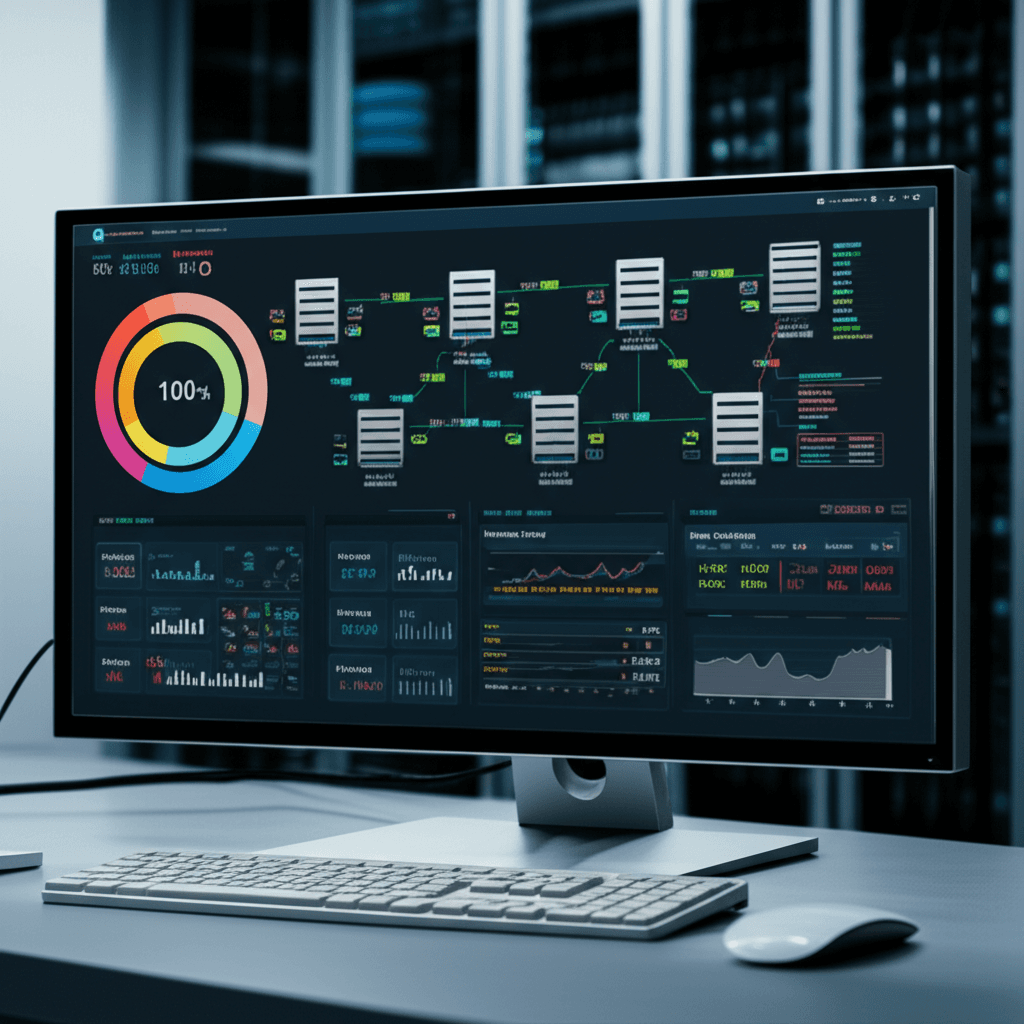
Modern database automation that treats infrastructure as code. Git-based workflows for all changes, self-service developer portals, and automated operations that reduce manual toil by 80%. Enable your team to move fast while maintaining reliability.
Modern Automation
Automation Pillars
Comprehensive database automation built on GitOps, IaC, and platform engineering principles.
GitOps for Databases
Git-based workflows for all database operations. Pull request-driven changes with automated validation, approval workflows, and audit trails. Every change is versioned, reviewed, and reversible.
Capabilities
- PR-based schema changes
- Automated change validation
- Drift detection & remediation
- Rollback automation
Tools
Infrastructure as Code
Declarative database infrastructure with Terraform, Pulumi, or Crossplane. Reproducible environments, version-controlled configurations, and automated provisioning across any cloud.
Capabilities
- Terraform modules
- Multi-cloud provisioning
- Environment parity
- State management
Tools
Platform Engineering
Build Internal Developer Platforms (IDPs) that enable self-service database operations with guardrails. Developers get databases on-demand while maintaining security and compliance.
Capabilities
- Self-service portals
- Database templates
- Compliance guardrails
- Resource quotas
Tools
Schema Migration Pipelines
Safe, automated schema migrations with zero-downtime deployments. Automated impact analysis, staged rollouts, and automatic rollback on failures.
Capabilities
- Zero-downtime migrations
- Automated validation
- Staged rollouts
- Automatic rollback
Tools
Automated Operations
Event-driven automation for routine operations: backups, maintenance windows, security patching, and performance tuning. Reduce manual intervention and human error.
Capabilities
- Scheduled operations
- Event-driven workflows
- Auto-remediation
- Maintenance automation
Tools
Observability Integration
Automated observability setup with every database deployment. Pre-configured dashboards, alerts, and SLO tracking integrated into the provisioning workflow.
Capabilities
- Auto-instrumentation
- Pre-built dashboards
- SLO-based alerting
- Log aggregation
Tools
Automation Architecture
Automation & CI/CD Failure Modes
Automating database operations eliminates manual human toil, but introduces complex failure modes around locks, state divergence, and split-brain elections. Here is how JusDB hardens database pipelines.
Unmitigated DDL Metadata Lock Cascade in Automated CI/CD
An automated pipeline runs an ALTER TABLE statement without aggressive lock timeouts. Even brief exclusive table locks block incoming transactions, causing hundreds of API requests to queue behind the lock, quickly exhausting the connection pool and crashing production APIs.
Enforcing online schema migration tooling (gh-ost, pt-online-schema-change, pg_repack), setting strict per-transaction lock_timeout = 2s limits, and validating DDL in pre-flight staging shadow replays.
State Drift & Destructive Reconciler Overwrites in IaC
An urgent manual production hotfix (such as modifying parameter groups or scaling storage) creates state divergence from Terraform or Crossplane state. A subsequent automated CI/CD apply forcefully overwrites the manual changes or triggers an unintended instance reboot.
Deploying continuous drift-detection operators, importing out-of-band changes via Git PRs within 1 hour, and configuring prevent_destroy and lifecycle ignore guards on stateful database resources.
Automated Operator Split-Brain on Transient Network Partition
A transient 3-second network blip between Kubernetes worker nodes causes a database operator to trigger premature leader re-election while the old primary is still writing uncommitted transactions, causing data divergence and split-brain.
Configuring consensus-driven DCS (Distributed Configuration Store) like etcd with conservative lease TTLs, fencing mechanisms (STONITH/node ejection), and synchronous replication quorum gates.
Pipeline Runbooks
Automated Pipeline Diagnostic Commands
Essential production SQL diagnostic queries our platform engineers use to detect lock contention cascades and online schema migration bottlenecks.
Reveals blocked queries and the root blocking transaction PID during automated DDL operations or unindexed foreign key updates.
-- Find blocked processes, blocking PIDs, and executing SQL
SELECT
  blocked_locks.pid AS blocked_pid,
  blocked_activity.usename AS blocked_user,
  blocking_locks.pid AS blocking_pid,
  blocking_activity.usename AS blocking_user,
  blocked_activity.query AS blocked_statement,
  blocking_activity.query AS blocking_statement
FROM pg_catalog.pg_locks blocked_locks
JOIN pg_catalog.pg_stat_activity blocked_activity ON blocked_activity.pid = blocked_locks.pid
JOIN pg_catalog.pg_locks blocking_locks
  ON blocking_locks.locktype = blocked_locks.locktype
  AND blocking_locks.database IS NOT DISTINCT FROM blocked_locks.database
  AND blocking_locks.relation IS NOT DISTINCT FROM blocked_locks.relation
  AND blocking_locks.pid != blocked_locks.pid
JOIN pg_catalog.pg_stat_activity blocking_activity ON blocking_activity.pid = blocking_locks.pid
WHERE NOT blocked_locks.granted;
Monitors active table locks held by schema migration tools (gh-ost, pt-osc, pg_repack) and tracks average hold duration.
-- Monitor DDL migration locks and transaction duration
SELECT
  l.locktype,
  l.mode,
  l.granted,
  count(*) AS active_locks,
  round(avg(EXTRACT(epoch FROM (clock_timestamp() - a.query_start))), 2) AS avg_sec
FROM pg_locks l
JOIN pg_stat_activity a ON l.pid = a.pid
WHERE a.query ILIKE '%ALTER TABLE%' OR a.query ILIKE '%CREATE INDEX%'
GROUP BY l.locktype, l.mode, l.granted;
Measurable Impact
Toil Reduction
Transform manual operations into automated workflows. See the before and after of database automation.
Database Provisioning
Self-service provisioning with pre-approved templates
User/Access Management
RBAC with SSO/LDAP integration and just-in-time access
Schema Migrations
CI/CD with automated validation and staged rollouts
Backup Verification
Automated restore testing with validation reports
Security Patching
Automated patch assessment and staged deployments
Performance Analysis
Automated anomaly detection and recommendations
Comparative Analysis
Database Automation: Evaluation Matrix
How JusDB's GitOps database platform compares against ad-hoc shell scripts, generic cloud IaC, and traditional ticket-based manual DBA workflows.
| Evaluation Vector | JusDB GitOps Platform | Ad-hoc Shell Scripts | Manual Ticket-Driven DBAs |
|---|---|---|---|
| Declarative Drift Detection & Reconciliation | Continuous GitOps reconciliation with instant rollback & zero config drift | Blind execution lacking state storage, idempotency & drift detection | Unrecorded hotfixes accumulating severe production configuration drift |
| Zero-Downtime Online Schema Migrations (DDL) | Automated gh-ost/pg_repack pipelines with aggressive lock timeout shedding | Blocking ALTER TABLE commands triggering metadata lock queue storms | High-risk manual maintenance windows with frequent accidental downtime |
| Developer Self-Service & Ephemeral Clones | Sub-15m self-service provisioning, copy-on-write clones & policy guardrails | Fragile scripts requiring root permissions and manual DBA triage | 2 to 5-day ticket queues for staging or ephemeral developer databases |
| Dynamic Ephemeral Secrets & JIT Access | HashiCorp Vault & KMS integration with short-lived just-in-time credentials | Static credentials embedded in shell scripts or environment files | Shared long-lived database passwords across multiple engineering teams |
| Automated DR & Backup Restore Drills | Scheduled automated restore verification, chaos drills & SLO validation | Basic backup cron jobs without automated restore integrity testing | Infrequent manual annual failover drills during emergency maintenance |
| Pre-Configured SRE Observability & SLOs | Day-one Prometheus/Grafana exporters, query insights & burn-rate alerts | Basic cron emails after disk saturation or process crashes occur | Reactive triage initiated only after end-users report API degradation |
Internal Developer Platform
Self-Service Capabilities
Enable developers to get databases on-demand while maintaining security and compliance.
Developer Self-Service
On-demand database provisioning through web portals, CLI, or API with guardrails
Database Templates
Pre-configured templates for different workloads: OLTP, analytics, caching, queues
Environment Management
Automated dev/staging/prod environment creation with production-like configurations
Cost Controls
Resource quotas, auto-shutdown policies, and cost allocation tagging
Technology Stack
Supported Platforms
Automation across all major databases and cloud platforms.






AWS

Azure

GCP
Structured Approach
Implementation Process
Our proven methodology for implementing database automation at scale.
Assessment
Audit current operations, identify toil, map workflows, and define automation priorities.
Foundation
Set up IaC repositories, CI/CD pipelines, secrets management, and observability baseline.
Automation
Implement high-priority automations: provisioning, backups, migrations, user management.
Platform
Build self-service portal, integrate with existing tools, and enable developer workflows.
Optimization
Iterate based on feedback, expand automation coverage, and measure toil reduction.
FAQ
Frequently Asked Questions
Common questions about database automation and our approach.
Keep Exploring
Related Services
Ready to Automate Your Database Operations?
Transform manual database operations into self-service, GitOps-driven workflows. Reduce toil by 80% and enable your team to move faster.
24/7 Support Available |contact@jusdb.com |Global Coverage